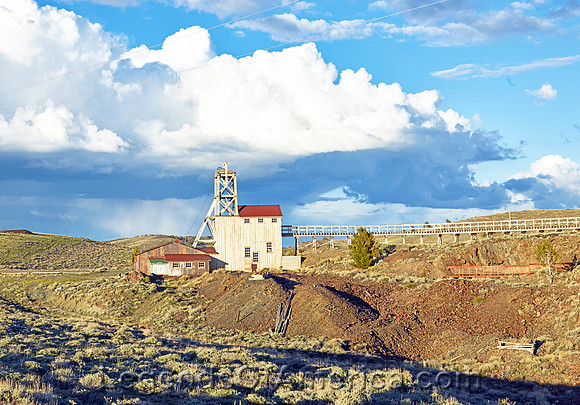
Remains of the old Carissa Gold Mine in South Pass City, a mining boomtown of 2,000 people in the 1860s in what is now Fremont County, Wyoming, that by 1949 was a ghost town. Over time miners, speculators, and businessmen, finding little gold and suffering in the region's winter blizzards and unrelenting summer heat, abandoned the town, which is named for the surrounding valley that proved the most reliable route through the Rocky Mountains for emigrants on the Oregon, Mormon, and California trails. Now a historic site, South Pass City once again has (in 2016) a few hardy residents. [NOTE TO RESEARCHERS: South Pass City has an unrelated and important role in history. See below.]
One of the first arrivals to South Pass City, in 1869, was Esther Hobart Morris, who a year later became the first woman in the United States to serve as a justice of the Peace. At her urging, William H. Bright, a saloon owner and representative to the Wyoming Territorial Constitutional Convention, introduced a women's-suffrage clause into the territorial constitution. When the constitution was approved by Territorial Governor John A. Campbell in December 1869, Wyoming became the first jurisdiction in the United States to grant women the right to vote, a right which was not granted women nationally until 1920. Photo by Carol Highsmith, 2016.
No EXIF information is available
Categories & Keywords
Category:
Subcategory:
Subcategory Detail:
Keywords:Wyoming, carissa mine, esther hobart morris, fremont county, ghost town, south pass, south pass city, woman's suffrage